

3 Myths About Substack Notes That Keep Writers Stuck
It's Not You, It's the Advice You've Been Sold

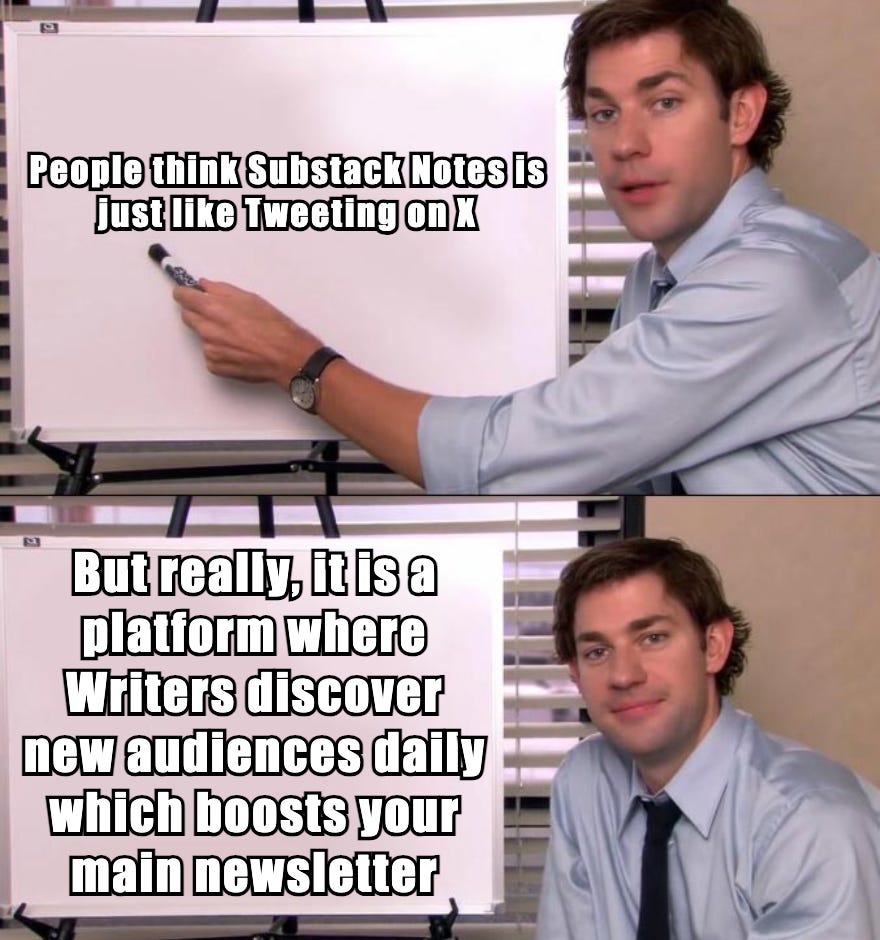
Here’s something nobody tells you about Substack: the advice you’ve been following was probably written for a different platform.
Most “grow your audience” content started on Twitter, Medium, or LinkedIn. It got copy-pasted into Substack circles, stripped of context, and repeated until it sounded like gospel. The problem is Substack Notes isn’t Twitter. A Note isn’t a tweet. The people reading your Notes aren’t there to be entertained for thirty seconds and scroll on.
They’re already considering subscribing to you. They’re shopping.
Which means Notes isn’t about going viral. It’s about converting browsers into subscribers. That requires a completely different approach than chasing attention on Twitter. You’ve been losing motivation not because you don’t know what it takes. You’ve been losing motivation because you’re measuring yourself against the wrong scoreboard.
Before we get to what works, let’s clear out what doesn’t. Here are three myths you’ve probably been told about Substack Notes.
Myth #1: You have to write a new Note every day to grow
This one is half right.
You do need to post Notes daily. More Notes means more chances for the right reader to find you and convert. But you don’t have to write every day. There’s a difference, and it matters.
Here’s what top Substack writers actually do: they schedule. That’s the whole secret.
Sitting down every morning trying to summon a fresh Note out of thin air isn’t a system. It’s a tax on your willpower. And willpower runs out. What you actually need is two things — a Note Bank and a scheduler. The Note Bank stores Notes written across many sessions, whenever inspiration hits. The scheduler puts them out into the world every day, whether you sit down to write or not.
Until March 2026, you couldn’t schedule Notes natively on Substack. Now you can. Tools like WriteStack also let you batch-schedule and analyze your Notes. The move is simple: sit down one day, write for seven, fourteen, or thirty days out, then schedule everything.
Build the system, not another task on your to-do list which could be automated.
Myth #2: Every Note needs a call to action
This advice came straight from Twitter — and it doesn’t belong on Substack.
On Twitter, when a tweet went viral, you’d drop a CTA underneath: a link to your lead magnet and a prompt to subscribe. That makes sense on Twitter because you have to physically pull readers off the platform to convert them. Substack does that work for you. If your Note lands, readers want more. Substack captures their email. You don’t have to ask.
Here’s what actually happens when someone reads a Note that resonates. They don’t click your subscribe link. They go to your profile. They read your bio. They scroll through your last ten Notes. And if your writing connects, they subscribe — no prompt required.
When every Note ends with “what do you think?” or “subscribe for more,” your feed starts looking like a sales funnel instead of a writer. Readers notice. That shift in perception costs you more than any CTA ever earns.
Save the call to action for moments that genuinely need one.
Most of the time, just write the thing.
Myth #3: If a Note flops, you’re doing it wrong
Flops aren’t failures. They’re data.
Your Notes are going to flop. That’s not a warning — that’s a given. Most Notes will get zero, one, or two likes. That’s baseline. That’s completely normal. Every writer on Substack, at every level, has a graveyard of Notes nobody touched.
But every once in a while, usually when you weren’t even trying that hard, a Note lands. Ten likes. Six comments. A handful of new subscribers. That’s not a fluke. That’s a signal telling you: write more like this one.
These are called spike Notes. Mining a spike Note is the closest thing to a growth shortcut that exists on Substack. When you find one, you have a playbook. Build your next ten or twenty Notes around the same theme. Expand it into a long-form article. Turn the idea into a digital product if it keeps resonating.
A Note that flops still tells you something. It tells you what’s not working, which is exactly how you find what is.
I analyzed 75 high-performing “spike” Notes across 10 writers.
Here are 5 types of Substack Notes that works — with templates — in a 41-page Playbook for first-time Substack writers.
Get Your Copy Now!